Negroni Cocktail
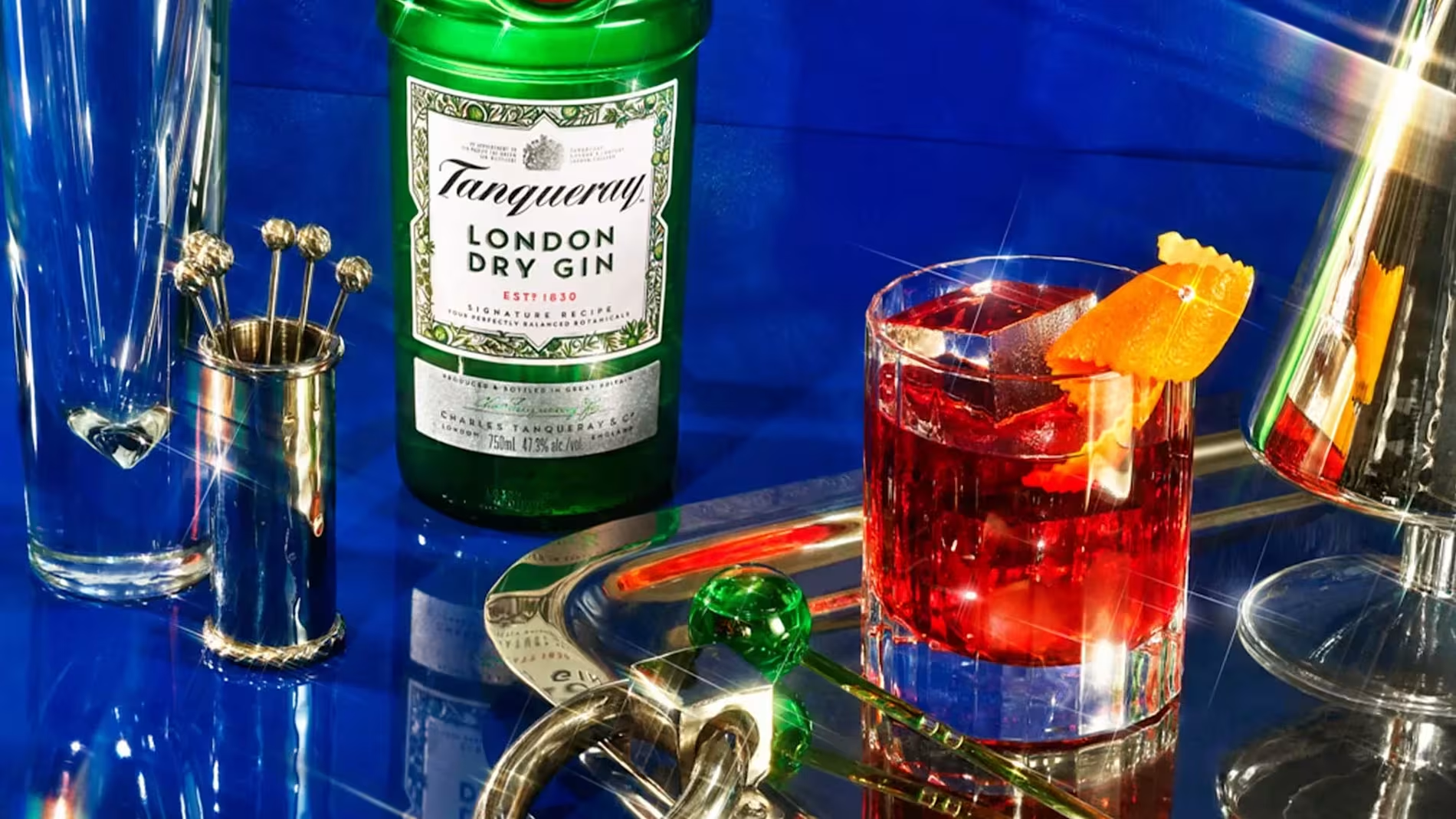
The Negroni cocktail has an assertive character and perfect symmetry. Created in Italy, the drink combines gin, vermouth, and aperitif in equal proportions to create something that is uncompromisingly bitter but smooth. Its distinctive ruby colour is a visual pleaser, and its simplicity conceals a rich depth. Served over ice and garnished with an orange twist, the Negroni cocktail is for those with an affinity for structure, balance, and a touch of contrast.
A three-ingredient cocktail, the Negroni is a modern-day classic, invented in the early 20th century in Florence. Considered an aperitif (an alcoholic drink served before a meal), the drink is built directly in the glass. An earlier version was supposed to be shaken and served. Both versions had the same Negroni ingredients–gin, Italian bitter apéritif, and vermouth–but used in different proportions and techniques. The present-day Negroni recipe calls for equal measurements of the three ingredients. Other, older versions of the cocktail, found in Italian cocktail books from the 1930s and 40s, also list a different ratio of 2:1:1 (gin, vermouth, and bitter apéritif).
Even in its current, equal-parts version, Negroni is one of the most assertive gin cocktails, featuring a flavour profile more common to whisky drinks. In fact, the cocktail is considered similar to two classic whisky cocktails. One is the Boulevardier, made with bourbon whiskey instead of gin and in 3:2:2 instead of equal parts (1:1:1). And the other is Old Pal, made with rye whiskey instead of gin, dry vermouth instead of sweet vermouth. All three are served straight up with an orange twist.
If a cocktail becomes popular, its variations follow soon enough. The same is the case with the Negroni cocktail, which has been adapted into a Negroni sbagliato (uses sparkling white wine or Prosecco in place of gin), Pisco Negroni (with pisco in place of gin) and even Negroski (with vodka instead of gin). There’s also the Cardinale cocktail that uses dry vermouth in place of sweet vermouth.
How to make a Negroni like a pro
The Negroni is a delicate balance of equal parts gin, sweet vermouth, and bitter aperitif. Because it relies on only three ingredients, even a minor misstep can throw off the entire profile. To nail this classic cocktail, focus on the following:
- Use a single, large solid ice cube (or sphere) in your rocks glass. Smaller, fragmented ice melts too quickly, which will over-dilute your drink.
- Always express (squeeze) the oils from the orange peel over the top of the glass. This gives the drink its signature aromatic nose. Also, while it is a common habit, avoid rubbing the orange peel directly on the rim of the glass. The residue will cause a slightly numbing or waxy effect when you take a sip
- Sweet vermouth is a wine-based ingredient and will spoil. Always store it in the refrigerator after opening and use it within a month for the best flavour.
- Stir your drink with ice in a mixing glass for about 20 to 30 seconds. You want enough dilution to soften the raw alcohol bite, but not so much that it tastes watered down.
- Since the spirit makes up a third of your drink, a harsh or bottom-shelf gin will ruin the finish. Use a good London dry or a juniper-forward gin like the Tanqueray London Dry gin or any other.
What you’ll need
Ingredients
- Gin30ml
- Non-alcoholic red aperitif30ml
- Sweet vermouth30ml
- Orange sliceFor garnish
- Ice cubes
Method
- Step 1
Pour the gin, non-alcoholic aperitif, and sweet vermouth into a mixing glass filled with fresh ice cubes.
- Step 2
Stir the mixture carefully for around 20 seconds to chill and adequately dilute the cocktail without diluting the flavours too much.
- Step 3
Strain the agitated mixture into a rocks glass filled with fresh ice to maintain clarity and temperature in the final serving.
- Step 4
Garnish with a fresh orange slice, which adds scent and highlights the citrus notes in the vermouth and aperitif blend.
Tips & Suggestions
Use a dry, juniper-dominant gin so that it can stand up to the bitterness of the aperitif and the sweetness of the vermouth.
Select a good-quality sweet vermouth; a fresh, properly stored bottle contributes rich herbal depth and keeps the drink from becoming dull and syrupy.
You May Also Like


FAQs
Vermouth is a fortified wine flavoured with various herbs and spices. It is traditionally produced in two styles: dry (white) vermouth and sweet (red) vermouth.
More from The Bar




Stay Inspired
Sign up to our newsletter for exclusive recipes, insider secrets and special offers - all delivered straight to your inbox.
