What’s A Listening Bar & How Is It Different From A Speakeasy
Introduction
There was a time when the bar scene in India straddled two extremes — fine-dining restaurants with expertly crafted cocktails and strict dress codes, and no-frill, simple dive bars that welcomed one and all with basic pour and neat sips. Somewhere in the middle, clubs with really loud music also existed.
Then came the modern-day speakeasies. Here, the drink menu balanced experimental concoctions with classic serves, the setting was secretive but accessible with the right code, and the clientele was a mix of regulars and newbies.
The recent years have seen exponential growth in the speakeasy bar scene in India, and even led to a new niche that lies adjacent to it, the listening bar. But what separates the two? And how can you pick the right place to visit when you step out? Get all the answers here.
What Is A Speakeasy Bar?
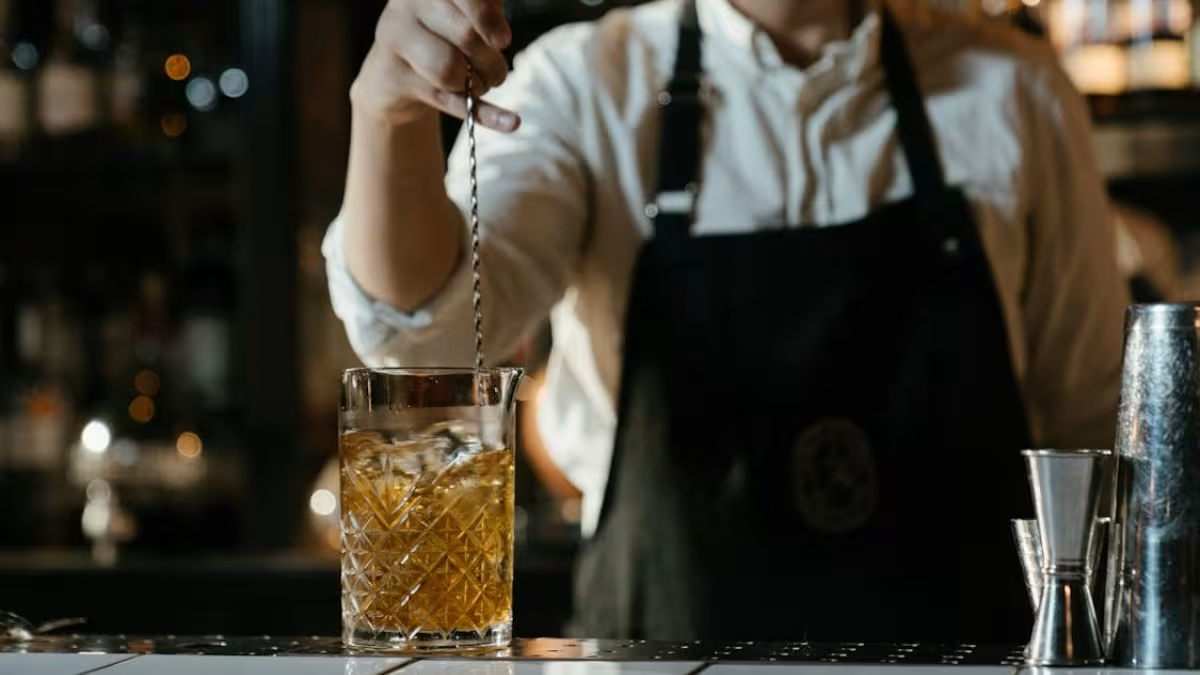
The origin story of a speakeasy goes back to the 1920s American Prohibition era, when the government had banned the manufacture, sale, or transportation of alcoholic beverages. The nation responded with speakeasies – secret bars, usually operating underground or behind legal establishments; people were supposed to "speak easy" (quietly) about the establishment to avoid detection.
The modern-day speakeasies took the concept and turned it into a theme – replicating the dimly lit rooms, hidden locations, small size, and unmarked entries. And the drinks on the menu? From Prohibition-era classics like the Sidecar, Bee’s Knees, and Southside to modern-day inventions, there’s enough variety for all types of consumers. The start of the new-age speakeasies and craft cocktail movement is often attributed to Milk & Honey in New York, USA (established in 1999).
Hidden Location: Often hidden behind legitimate businesses, in basements, or in unmarked alleyways. There is no visible signage for the establishment.
Secret Entry: The entry might require a password, a secret knock, or finding a hidden door (e.g., behind a bookcase or phone booth).
Quiet Atmosphere: They have limited seating, prioritising quiet, dimly lit spaces with retro or vintage decor.
Craft Cocktails: Known for high-quality cocktails, often featuring classic Prohibition-era recipes or unique, experimental ingredients.
Speakeasy Bars in India
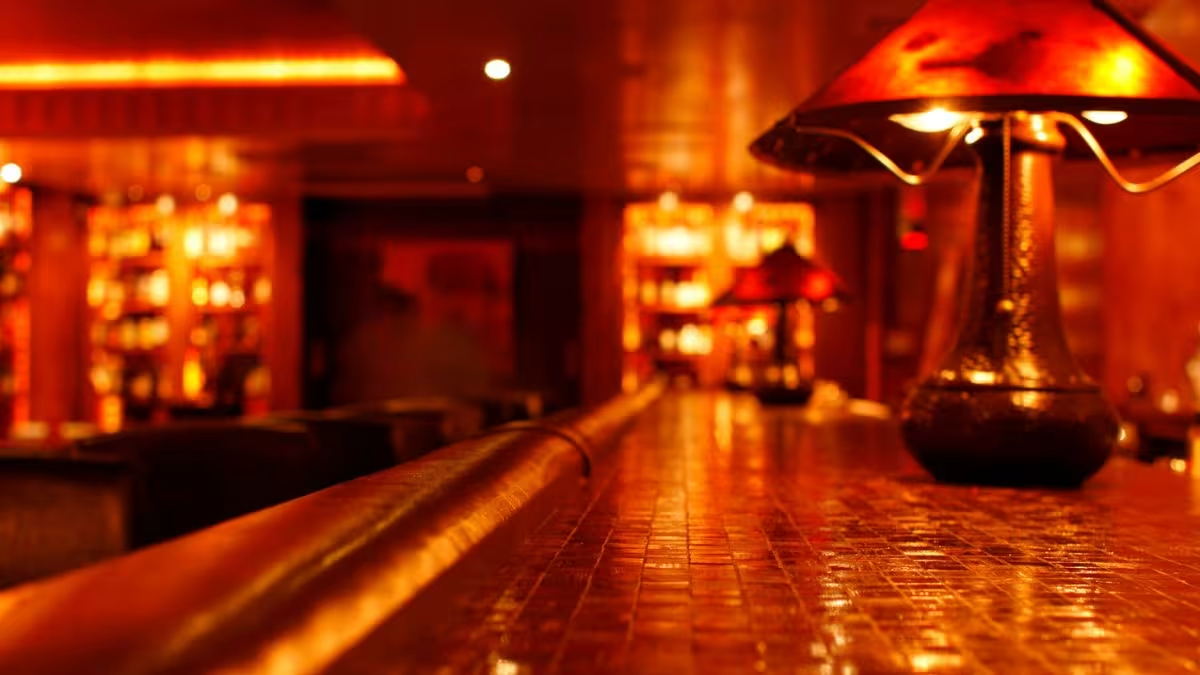
In India, particularly, the concept of a modern-day speakeasy bar first came to the forefront around 2012, with establishments like PCO (Pass Code Only) in Vasant Kunj, Delhi, and Cocktails and Dream in Gurgaon.
In recent years, speakeasies have cropped up at the speed of mushrooms, experimenting with different themes, entrances, and menus. Over a decade later, the speakeasy culture is welcoming the latest trend in the drinking space — SOPI in Mumbai is a 25-seater speakeasy-style eatery, serving sourdough pizzas and ironically, drinks with 0 per cent ABV.
Ultimately, whatever may be on the menu, the speakeasy bars, from ZLB23 in Bengaluru to The Local in Mumbai, continue to be a trending oxymoron – meant to be secretive, and yet, known to almost everyone who steps out for a drink.
Did you know about the “Aunty Bars” of India?
The “secretive” speakeasies, modelled on the 1920s prohibition era, are a common theme today, but not the first time India has had secret bars. The "Aunty Bars" in 1950s/60s Bombay were technically the first secret bars that operated in residential homes.
What Is A Listening Bar?
It’s not difficult to imagine why a listening bar may be confused with a speakeasy. After all, both are thematic in their existence, and neither of the two is meant to be mainstream or loud. But while a speakeasy bar focuses on secret, vintage settings, a listening bar is meant for the quiet appreciation of music – the name almost gave that away, didn’t it?
Understanding the concept
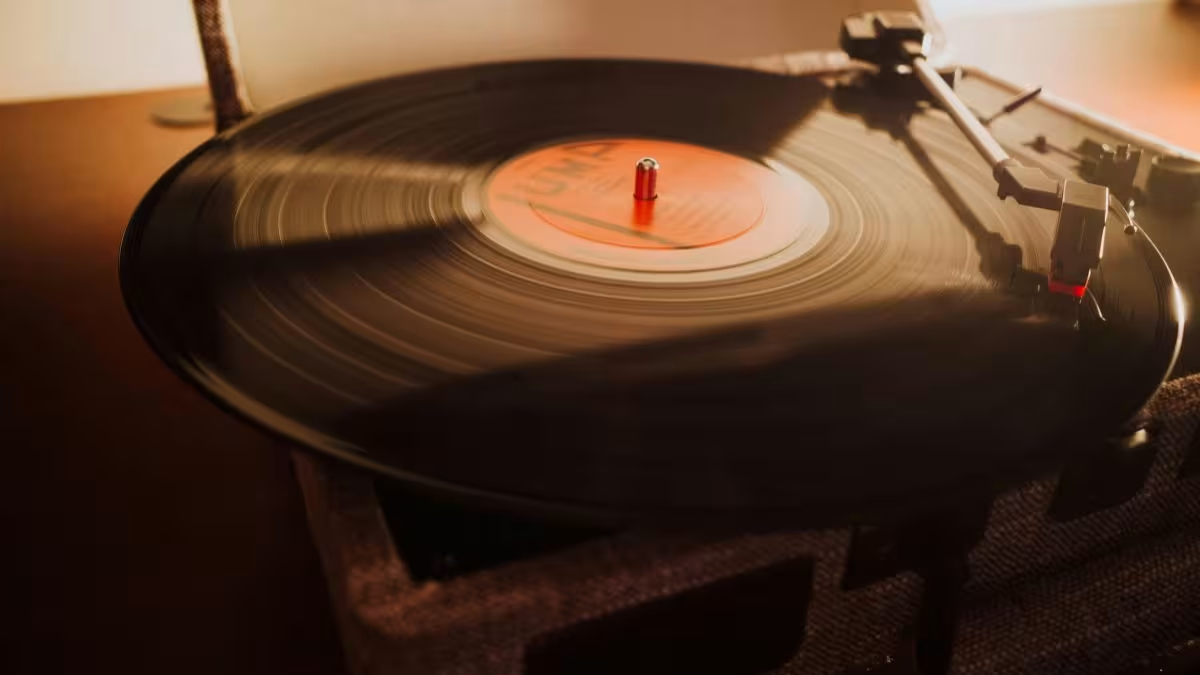
Listening bars, inspired by the Japanese music cafés called ongaku kissa, exist as a social alternative to loud nightclubs. With dimmed lighting and intentional acoustics, the focus is on high-fidelity audio, curated vinyl records, premium sound systems, and quiet atmospheres designed for appreciating music.
Originally, in the 1920s, ongaku kissa existed as specialised coffee shops in Japan, designed for listening to records (vinyl) in a tranquil, often silent environment. Many modern versions have swapped coffee for cocktails, but the primary focus remains music.
Listening Bars in India
In recent years, listening bars have emerged in New York, Los Angeles, London, and Paris. India entered the scene, with Together in Delhi, Baroke in Mumbai, Middle Room in Bengaluru, For The Record Vinyl Bar in Goa, and others. Some places may combine the idea of a listening bar and speakeasy to create a secretive spot, with a focus on music. Like the recently opened Three Zero Four in Delhi.
Audio Focus: High-end, bespoke speaker systems are paramount to provide immersive, crystal-clear sound.
Vinyl Curations: Music is often played from vinyl records, curated by specialists to create a specific mood or journey.
Atmosphere & Design: Dim lighting with intentionally designed interiors, meant to be for a more mature/grown-up audience.
Etiquette: Unlike clubs, conversation is allowed but should not disrupt the music, making them ideal for small groups.
Choosing Between A Speakeasy Bar Vs Listening Bar
If you’re thinking of exploring one of the two, then focus on your core interests and goal for the outing. If the idea is to enjoy speciality cocktails in places that are less likely to be crowded or playing loud, thumping music, step into a speakeasy. However, if you are someone who appreciates the finer notes of music, consider vinyl records to be superior to modern music players, and like discussing music over drinks, then head to a listening bar.
Now, the next time you step into a speakeasy bar, a listening bar, or a third place that combines the two, you’ll know what sets it apart!
*Drink Responsibly. This communication is for audiences above the age of 25.
FAQs:
A listening bar is a venue designed around high-quality sound and music appreciation. Inspired by Japanese music cafés, these spaces prioritise curated playlists, vinyl records, and immersive audio systems over loud, social atmospheres.
You May Also Like

Drink Responsibly. This communication is for audiences above the age of 25.

More from The Bar



Stay Inspired
Sign up to our newsletter for exclusive recipes, insider secrets and special offers - all delivered straight to your inbox.
