Indian Single Malts Are Storming The World Stage. Here's What Sets Them Apart

Introduction
At one point, single malt meant Scottish whisky. Then, other players entered the market. While Scotland still produces the most single malt whisky in the world, India has emerged as both a massive producer and one of the fastest-growing markets in the world for single malt. Today, Indian single malts are bagging top awards, coming on par with global brands. As per official reports, Godawan Single Malt has won over 100 awards since its debut in 2022. And it’s just one of the Indian brands earning national and global popularity.
So, what sets apart single malt whisky produced in India? Read ahead and discover!

The Distinct Indian Terroir
As is the case with any single malt, even the ones produced in India, need to be made with 100% malted barley and come from a single distillery. However, India’s tropical climate impacts the production process, altering the final taste and texture. Here’s how:
The warm temperatures force the spirit deep into the oak wood, absorbing immense flavour quickly. While Scotch ages slowly in cold warehouses, Indian whisky ages three times faster. This rapid ageing creates intense flavours in just 4 to 6 years. The artisanal Indian single malt Godawan is made in the deserts of Rajasthan, where the temperature reaches 38°C (100°F).
Angel’s share is common to whisky production. It refers to the amount of whisky that evaporates while ageing. However, India’s tropical heat causes a much higher evaporation: a 12% evaporation rate per year compared to the 2% per year in Scotland. This rapid breathing and loss create a highly concentrated, complex spirit.
Indian distillers use six-row barley grown in the foothills of the Himalayas. This grain is rich in protein and enzymes. It gives the whisky a natural, earthy thickness and nutty flavour right from the start.
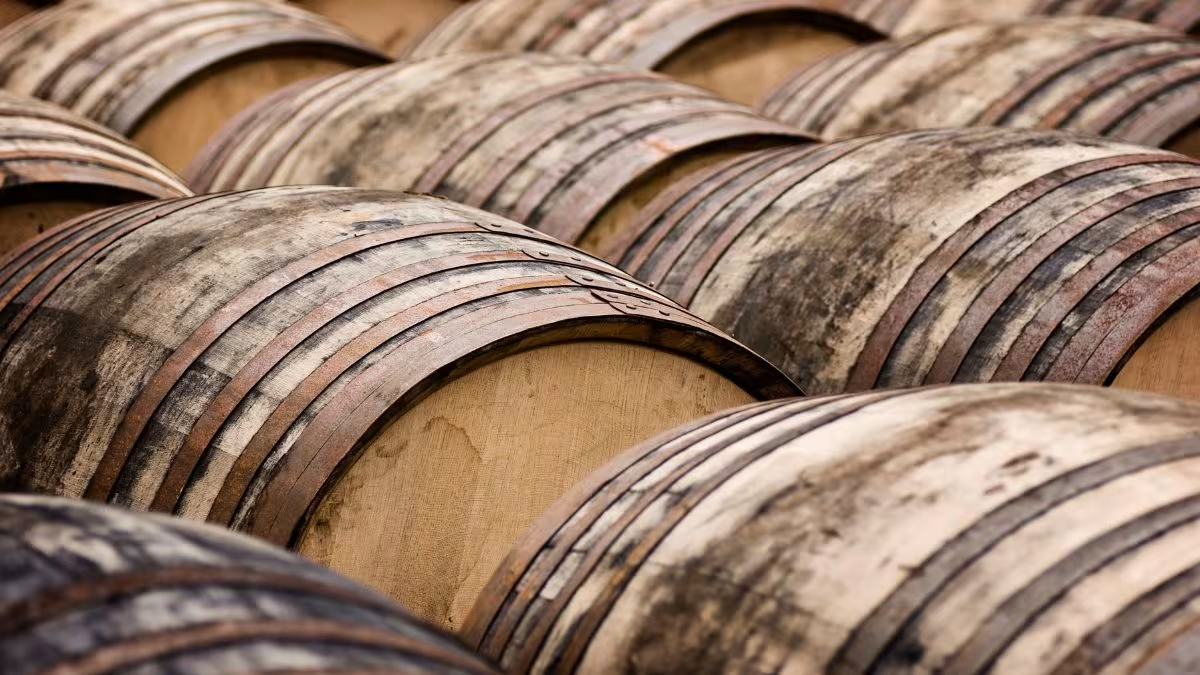
Cask management is almost an art in Indian whisky production. The distillers tend to age the whisky in used bourbon, sherry, wine, or even local brandy barrels to build incredibly rich, layered tastes. Among the two variants of Godawan, the Rich & Rounded is aged in sherry casks (specifically Pedro Ximénez casks) and the Fruit & Spice in hand-selected cherry casks.
Because of the fast ageing and unique barley, Indian single malts are not subtle. They are famous for heavy notes of tropical fruit, dark spices, and intense oak. The Godawan variants also include botanicals like Rasna and Jatamansi that provide nuanced flavour notes.
Indian Single Malt vs American, Japanese, and Scottish Malts
While all four are made from malted barley at a single distillery, the flavour differences are shaped by climate, cask selection, production techniques, and local whisky-making traditions. Here’s how the four compare:
Indian Single Malts are known for their rich, fruit-forward profile and rapid maturation, displaying notes of tropical fruits, honey, dried fruits, vanilla, spice, and oak.
Scotch single malts are the benchmark for the category, offering immense regional diversity. Speyside whiskies are known for orchard fruits and honeyed sweetness, Highland malts for balanced fruit and spice, Islay expressions for peat and smoke, and Lowland whiskies for lighter, floral notes. Cooler maturation results in slower, more gradual flavour development.
Japanese single malts are the most delicate. They feature delicate floral aromas, orchard fruits, gentle oak, subtle spice, and a clean, balanced finish. Rather than bold flavours, they prioritise harmony and nuance.
American single malts showcase flavours of caramel, vanilla, toasted oak, chocolate, roasted nuts, and baking spices. Many producers experiment with different casks and regional grains, resulting in a diverse and innovative style. In fact, these are the most experimental of the lot.
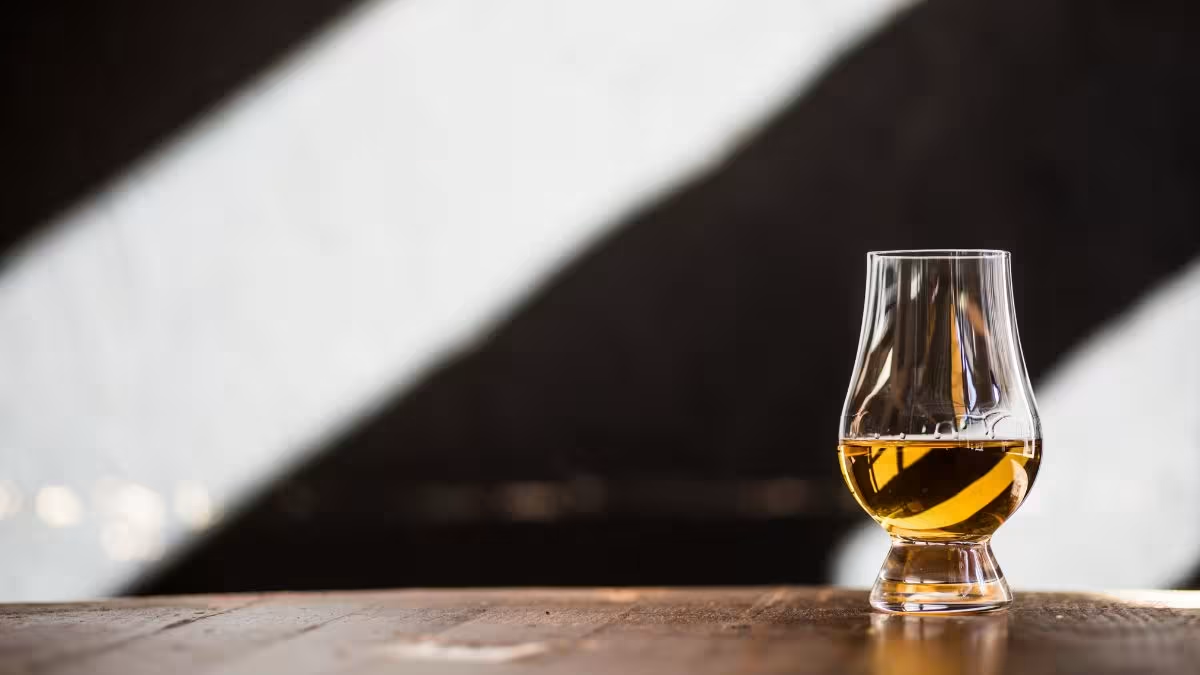
For the longest time, ageing was one of the greatest indicators of the whisky’s quality and also the most common concern around single malt produced in India. However, Indian single malt whisky has successfully busted this myth by focusing on other factors that matter: controlled barrel selection, the choice of barley and water, and active monitoring of maturation.
Whisky may evolve faster in India, but the intense heat helps the whisky interact faster with the oak casks. It creates a rich, complex flavour in a shorter time than traditional, cold-weather whiskies.
Indian Single Malt Price Range
Indian single malts typically range from ₹3,000 to ₹10,000+ for a standard 750 ml bottle, varying by state taxes and specific brands. For example, the Godawan Single Malt whisky price ranges between ₹4,300 and ₹6,600. The exact price depends on the expression (Godawan 01 vs Godawan 02), retailer, and stock availability.
For a 750 ml bottle of Godawan Single Malt (Godawan 01 Rich & Rounded or Godawan 02 Fruit & Spice), here are the approximate retail price ranges:
Delhi: ₹4,600–₹6,600
Mumbai: ₹4,500–₹6,500
Bengaluru: ₹4,300–₹6,600
Conclusion
The Indian Single Malt is no longer a novice category still finding its footing. Rather, it’s at the stage where whisky enthusiasts, bartenders, and even those looking for exclusive gifts are looking for these particular flavours and finishes. As the category continues to expand, whisky changes as well, becoming not just a sipping drink but also a mutating canvas of creativity for cocktail expressions.
*Drink Responsibly. This communication is for audiences above the age of 25.
FAQs:
Indian single malts are matured in a warmer climate, causing the whisky to age faster and develop richer flavours in less time. They typically showcase tropical fruit, spice, honey, and oak notes compared to the slower-aged profiles of Scotch.
You May Also Like







Drink Responsibly. This communication is for audiences above the age of 25.

More from The Bar



Stay Inspired
Sign up to our newsletter for exclusive recipes, insider secrets and special offers - all delivered straight to your inbox.
