All About Premium-Quality Indian Single Malt Available In India

Introduction
At one point, whisky meant Scotch. Slowly, other countries entered the foray but it wasn't until the 1980s that India began producing single malt. Originally used for only blended whiskies, the Indian single malts underwent a revolution in their use in the early 2000s. Today, India is one of the fastest-growing and most acclaimed markets for single malts, producing expressions with unique flavours. Indian single malts also have global credibility, and new expressions and labels are becoming more common.
Read ahead to discover premium-quality Indian single malt that you can try in India.
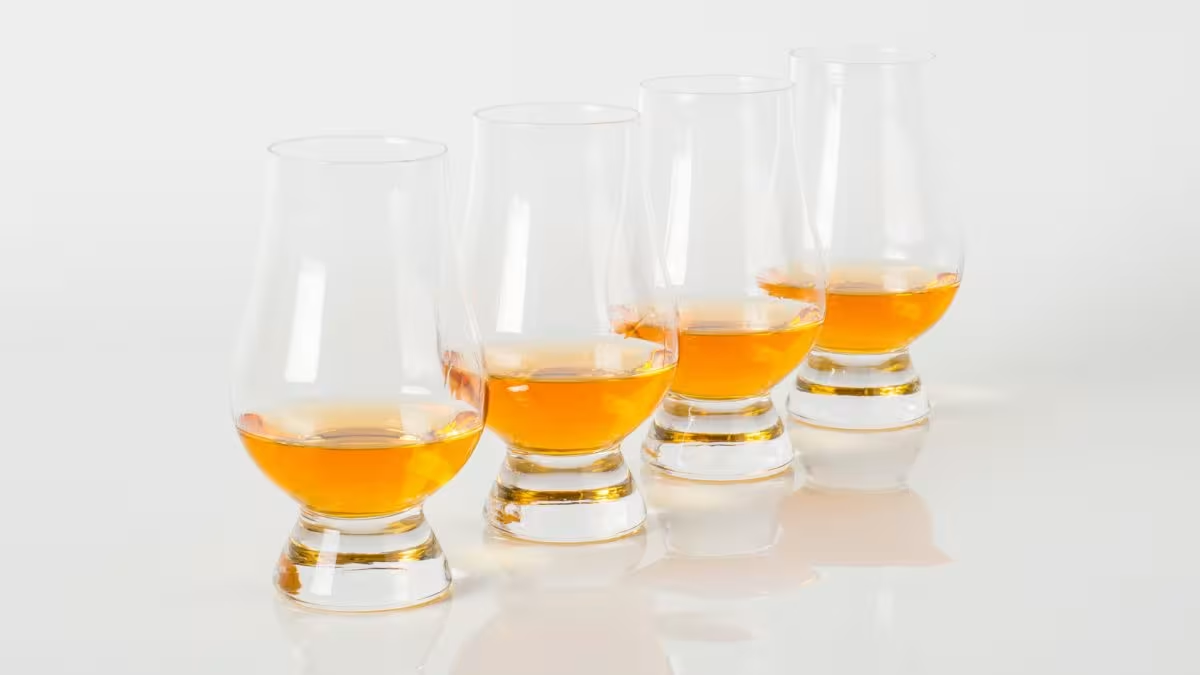
Indian Single Malts vs Others
An Indian single malt whisky must be:
Made from 100% malted barley
Distilled at a single distillery
Produced in pot stills
Aged in oak casks in India
Indian single malts differ from traditional malts on five key aspects:
Rapid Ageing/High Angel Share: Angel’s share is the evaporation rate of a whisky stored in casks/barrels. For Scotland, it stands at 2%. India's intense heat, however, causes a massive annual evaporation rate between 8% and 12%
Age Equivalence: The fast interaction between whisky and wood means a 3-year-old Indian single malt develops a rich depth and complexity comparable to a 10- or 12-year-old Scotch.
Barley Varieties: Barley is the grain commonly used to produce single malts. Indian single malts frequently utilise six-row barley, while traditional European and Scotch single malts predominantly use two-row barley.
Texture and Viscosity: Indian single malts have a noticeably thicker, more robust, and viscous mouthfeel.
Flavour: Indian expressions tend toward intense tropical fruits, rich oak, robust spices, and sweetness rather than the slow, delicate floral and honey notes typical of traditional cooler-climate malts
Which Single Malt Is An Authentic Expression Of India?
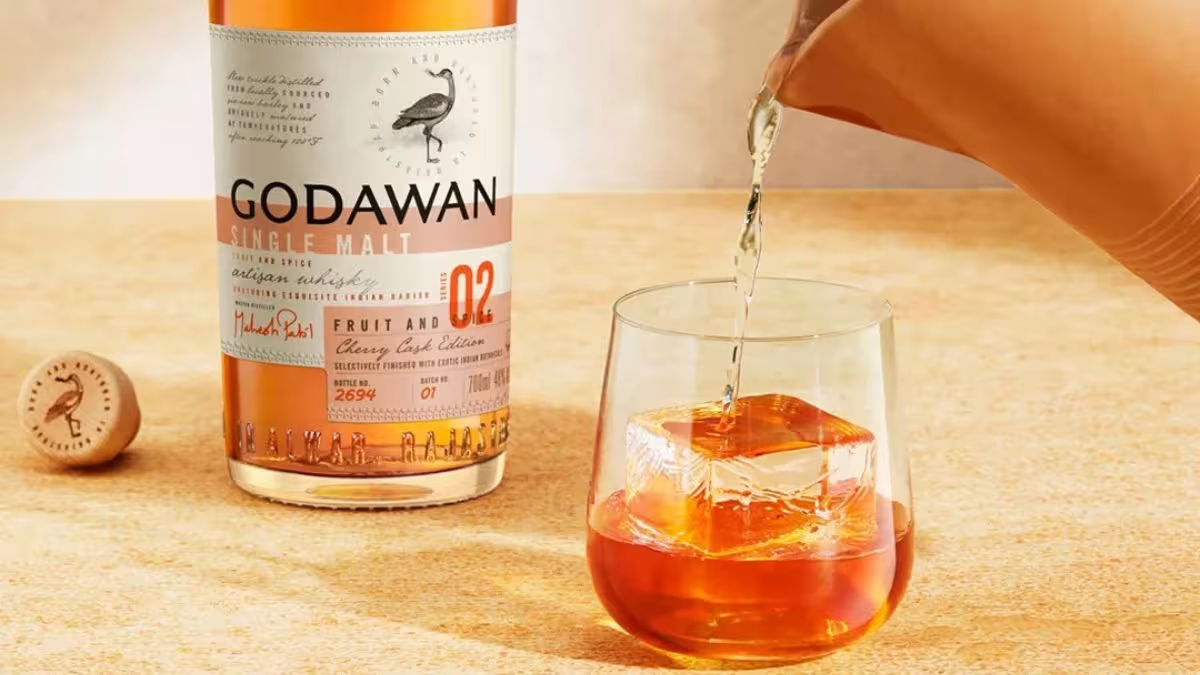
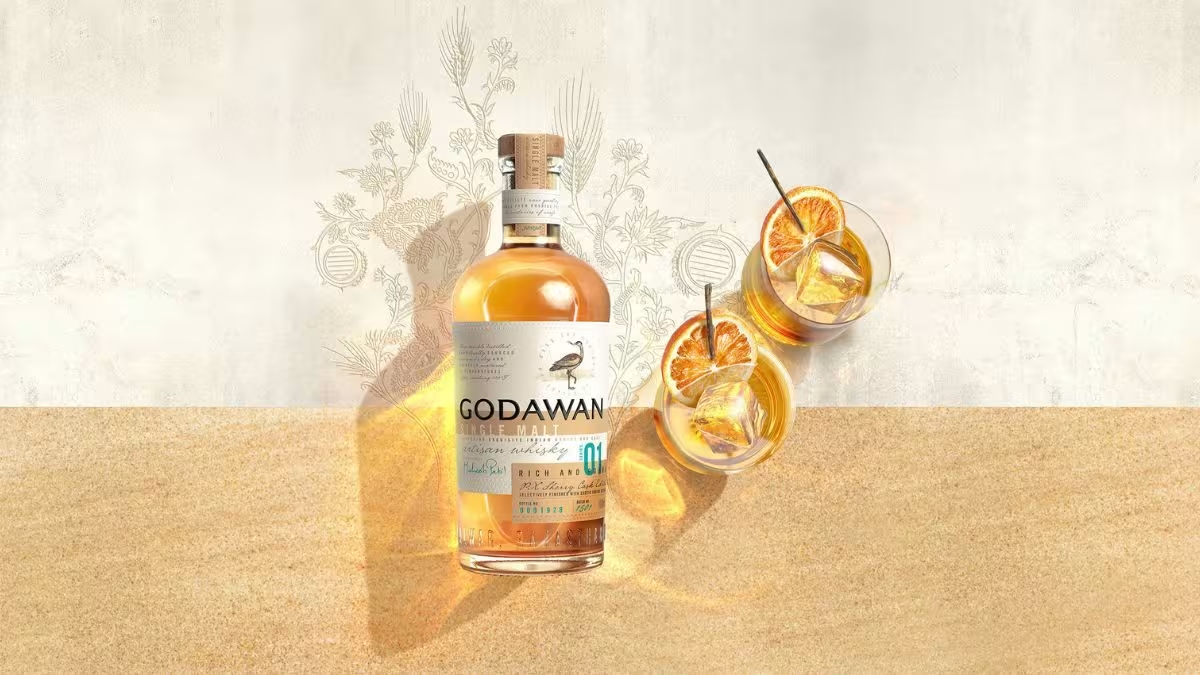
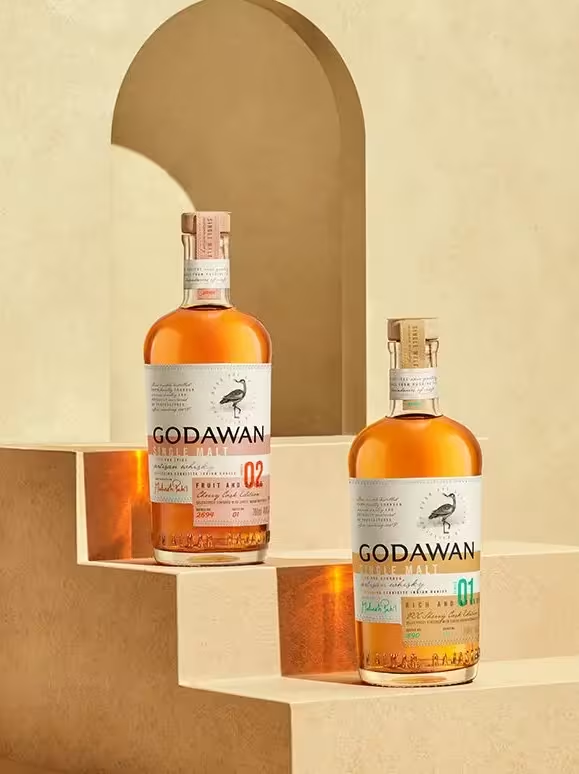
If you’re looking for an Indian single malt that maintains the premium flavour balance, texture, and mouthfeel of a single malt while also introducing distinctly Indian flavour notes, consider a single malt like Godawan. Grown from six-row barley in Rajasthan, it has a nuttier flavour than common barley. It has two primary variants: Godawan 01 Rich & Rounded and Godawan 02 Fruit & Spice. Take a look at their flavour, pricing, and more.
Flavour and Texture: Full-bodied, with layers of amber woodiness and dried fruits and a buttery, caramel-smooth texture.
Appearance: Medium amber with a rich glow.
Aroma: Notes of raisins, honeysuckle, caramel, and dried fruits.
How to serve: In a cocktail with tonic, or straight over ice.
Pricing: ₹3,000 to ₹5,500 across India, depending on the state excise duties
Flavour and Texture: A harmonious balance of wood spice, caramelised fruits, and flambeed Christmas pudding with a crisp, spiced texture.
Appearance: Medium gold with a refined glow.
Aroma: Delicate floral notes with soft fruits and matured oak.
How to serve: With a splash of water to open up its aromas, or paired with rich desserts like tiramisu.
Pricing: ₹₹3,500–₹5,500 across India, depending on the state excise duties
Both expressions tap into Rajasthan’s desert climate and botanicals. The use of botanicals, in particular, gives the whisky an authentically Indian flavour. The casks are steeped in botanicals, giving the whisky its characteristic spice.
How To Choose An Indian Single Malt?
Keep these tips in mind when choosing between Indian Single Malts:
Region: Coastal or dessert-based distilleries experience high heat and humidity, which accelerates maturation and interacts with the wood to produce rich and fruity profiles. Distilleries situated near northern mountain foothills experience distinct seasonal variations, yielding softer, smoother, and more delicate profiles.
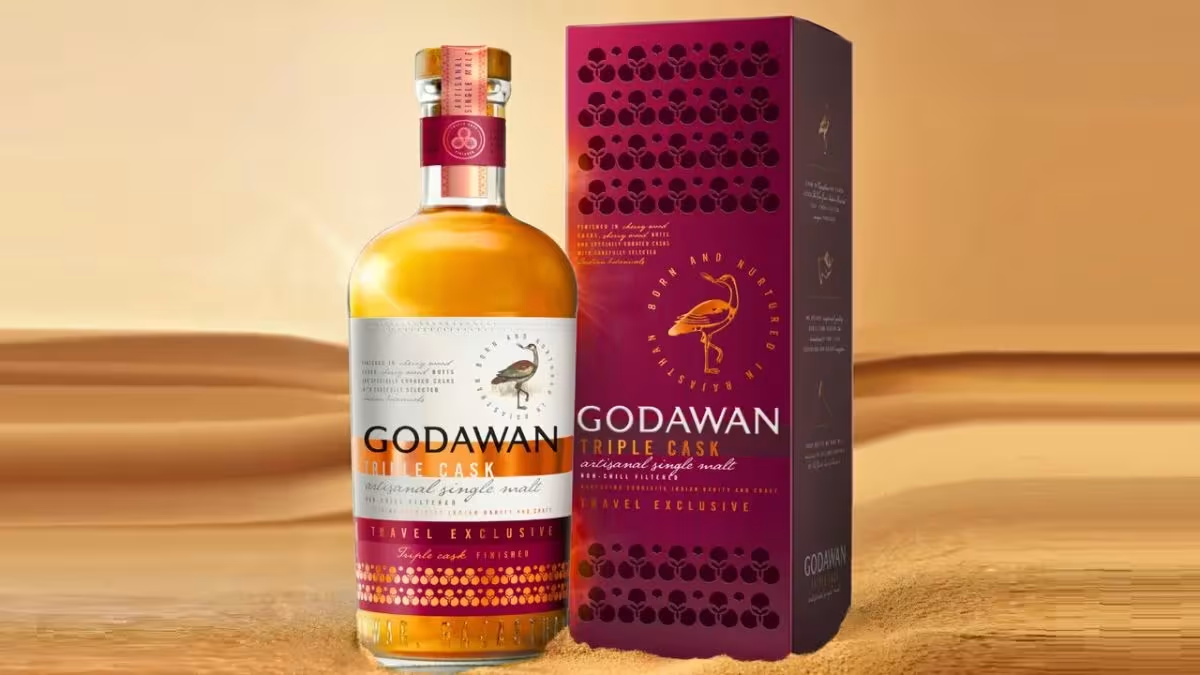
Cask Types: Many Indian single malts use Pedro Ximénez (like Godawan 01) or local red wine casks, offering notes of dark plum, blackberry, raisin, and heavy spices. You also get triple-cask variants that balance baking spices with toasted nuts and bright fruit, and peated expressions with smoky, earthy character.
Flavour familiarity: If you’re new to single malts, go for lighter, sweet expressions. If you’re familiar with the whisky, you can experiment with smoky variants.
Conclusion
Indian single malts are competing with global variants, winning international awards, and proving that there is a clear market for these flavours. When choosing an Indian single malt, don’t go by popular perceptions, such as that ageing alone determines quality. Rather, understand the production process and how ingredients have been used to make an informed decision.
*Drink Responsibly. This communication is for audiences above the age of 25.
FAQs:
Indian single malt whisky is made from 100% malted barley at a single distillery in India and matured in oak casks. Thanks to India's warmer climate, these whiskies often develop rich flavours more quickly than many whiskies matured in cooler regions.
You May Also Like





Drink Responsibly. This communication is for audiences above the age of 25.

More from The Bar


Stay Inspired
Sign up to our newsletter for exclusive recipes, insider secrets and special offers - all delivered straight to your inbox.
