Is Expensive Whisky Worth It? Understanding What You’re Really Paying For

Introduction
People often wonder if expensive whisky is worth it. The question of whether the price reflects the quality of whisky in relation to its flavour, age and rarity or not is a never-ending one. The price tag can often be indicative of how long and what type of barrel was used for the ageing process. In contrast, some high-end single malts are on par with mid-range and low-end whiskies in terms of oak, dried fruit and baking spice, etc.
Here’s everything you need to know about whisky and what drives its pricing.
Age: Does Time Always Add Value?
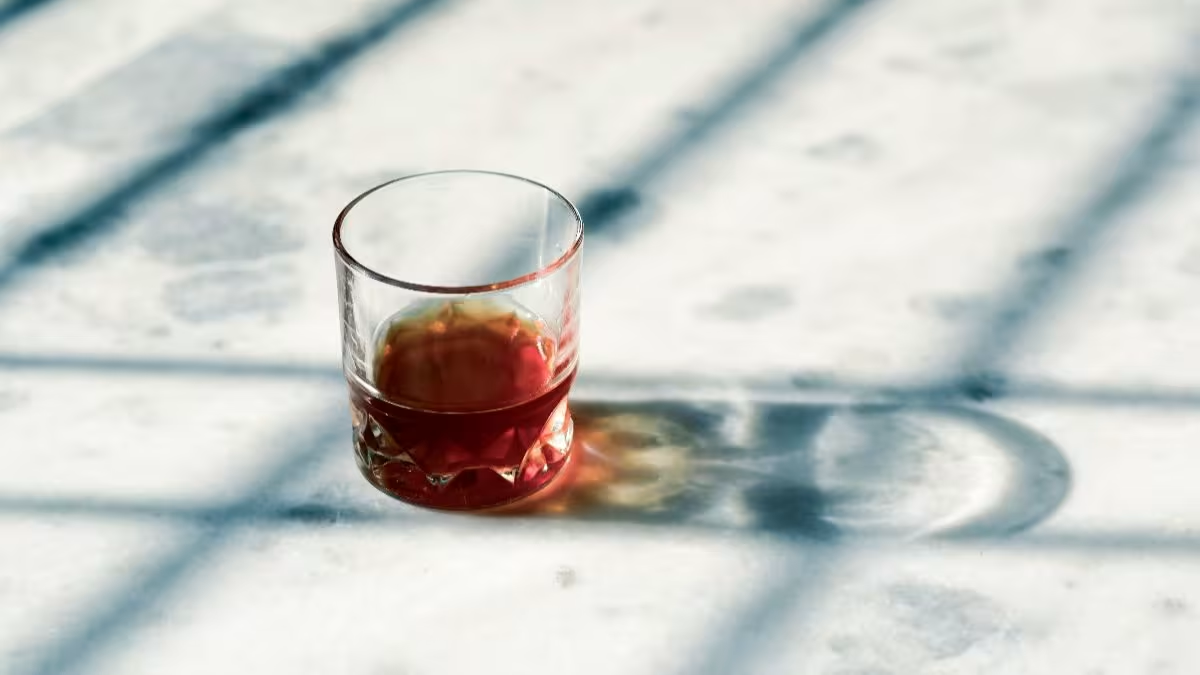
Age is an important consideration when it comes to the price of whisky; however, a whisky's age does not necessarily mean it will be more flavourful. As the whisky matures in oak barrels, it develops unique flavours such as vanilla, toasted spices, dried fruits, and tannic structure. However, when whisky is aged for longer periods of time, there is a risk of losing the distillate characteristics of the whisky to the cask.
Tasting a 12-year-old expression may show a bright cereal note with citrus peel; older expressions will typically be characterised by notes of walnuts, dark cocoa, and leather. While the cost of whisky rises due to the long time spent in storage, it does not always mean more complex flavours.
Origin: Why Geography Shapes Price
The area where whisky is produced affects both the cost of producing that whisky and the characteristics of the whisky itself. Distilleries producing whisky in regions with strict regulations or limited production capacity generally produce higher-priced whisky.
For example, for Scotch Whisky to qualify as such, it must be put into oak barrels for at least three years. It is also usually aged in controlled environments, increasing production costs. There are relatively new markets for whisky where production is less regulated and more experimental. The ageing conditions for these whiskies may allow for accelerated extraction of vanilla and spice flavours compared to other regions.
The region in which whisky is made will dictate how the estate determines taste, but the cost of whisky sold to consumers is determined more by the traditions associated with that region, the cost of the workforce who produces it, and the demand for exports.

Colour: Misleading or Meaningful?
Colour is often misinterpreted as a representation of quality. While there may be some correlation between how dark a whisky is and its price or flavour depth, darker whiskies could also be the result of two factors-
The duration for which they have aged in the cask
How heavily they have charred the cask.
Lighter whiskies will have characteristics described as sharper grain with green apple and a hint of spice, whereas dark whiskies show flavours described as molasses or oak-heavy. The colour, thus, is a reflection of the amount of time spent in the cask, rather than being a measure of how much "better" a whisky is than another.
Cask Type: Where Most of the Flavour Lives
The method used to select the cask (process to produce whisky) is a major determining factor of how much a whisky will cost to produce and what it will taste like.
For example, European oak generally imparts assertive tannins, clove-type spices and greater depth from dried fruit. On the other hand, American oak generally has prominent vanilla, coconut and soft caramel-type flavours. The use of sherry casks often drives whisky into a richer flavour profile with notes of raisin, fruit (fig) and nut-type characteristics. But acquiring and preparing sherry casks can be expensive, thus driving up the cost of a whisky significantly.
Rarity and Craft: The Invisible Cost
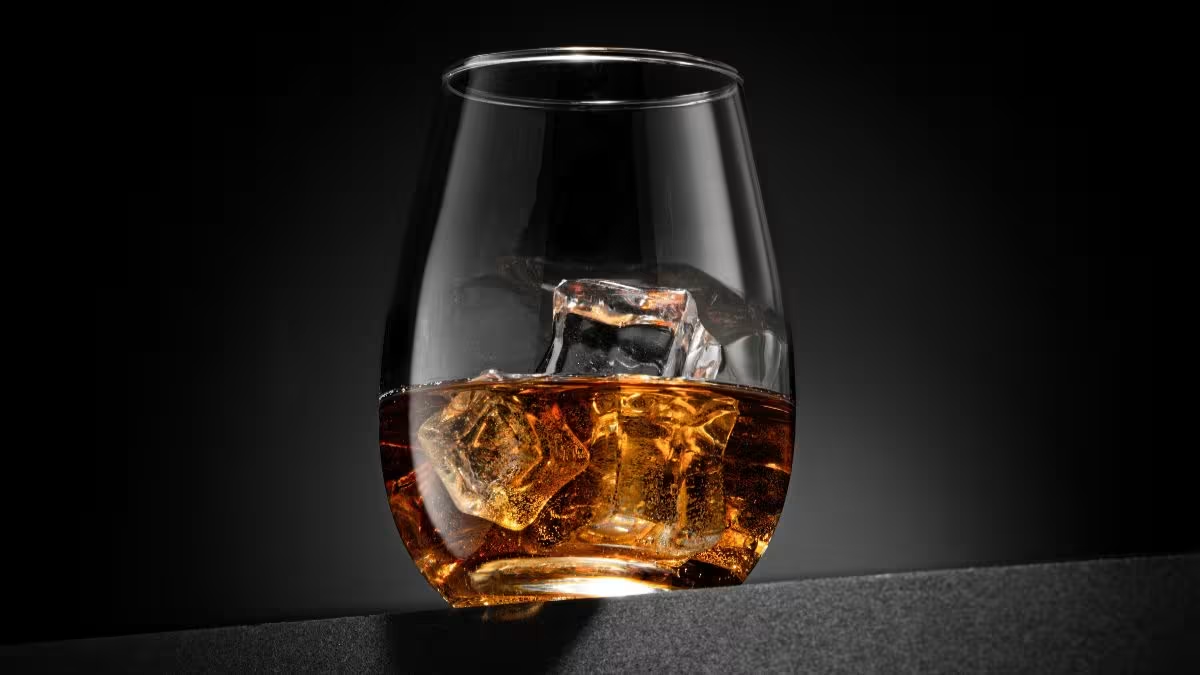
Typically, higher price points are associated with rare whiskies, since the whiskies are carefully crafted from a single barrel. Limited production whiskies such as those produced by single-batch methods sometimes feature a higher concentration of fruits, spicy oils or phenolic compounds than standard blended whiskies, but will not have a dramatic effect on their price. Limited production whiskies are often significantly more expensive than standard blended whiskies because of their limited supply, package design, marketing story, and demand from collectors.
So, Does Price Equal Taste?
Not always. Higher-end whiskies often have more complexity and depth in their oak character and finish compared to mid-tier whiskies. However, mid-tier whiskies, by way of their price, will generally provide a more direct representation of the related flavour characteristics. The difference in quality of whisky between price points usually results from a conflict between precision and rarity rather than from having completely different flavour profiles.
Conclusion
The value of expensive whiskies is determined by how you place value on what’s in the glass; neither time in barrel, cask quality, nor production limitations produces different flavour profiles in whiskies, but instead only shapes expectations. Ultimately, preference will determine the final purchasing decision.
*Drink Responsibly. This communication is for audiences above the age of 25.
FAQs:
The answer varies based on individual preferences, as many mid-tier whiskies already provide a good blend of oakiness, fruitiness and spiciness without a premium price tag.
You May Also Like







Drink Responsibly. This communication is for audiences above the age of 25.
Yash Lakhan


More from The Bar


Stay Inspired
Sign up to our newsletter for exclusive recipes, insider secrets and special offers - all delivered straight to your inbox.
