Cocktail Party Drinks: 5 Steps To Batch Cocktails For A Match Screening

Introduction
Batch cocktail recipes will add consistency to a match screening party since it eliminates mixing cocktails at the last minute. By batching cocktails, you will be able to ensure that all your guests receive an identical tasting cocktail. The batching process is relatively easy: first, accurately scale the recipe according to group size; next, separate unstable ingredients; third, account for the dilution caused by any ice; fourth, chill your drinks adequately; and finally, prepare any elements of the cocktail before serving.
Let’s take a look at the steps in detail.
Step 1: Start With A Cocktail That Can Be Batched
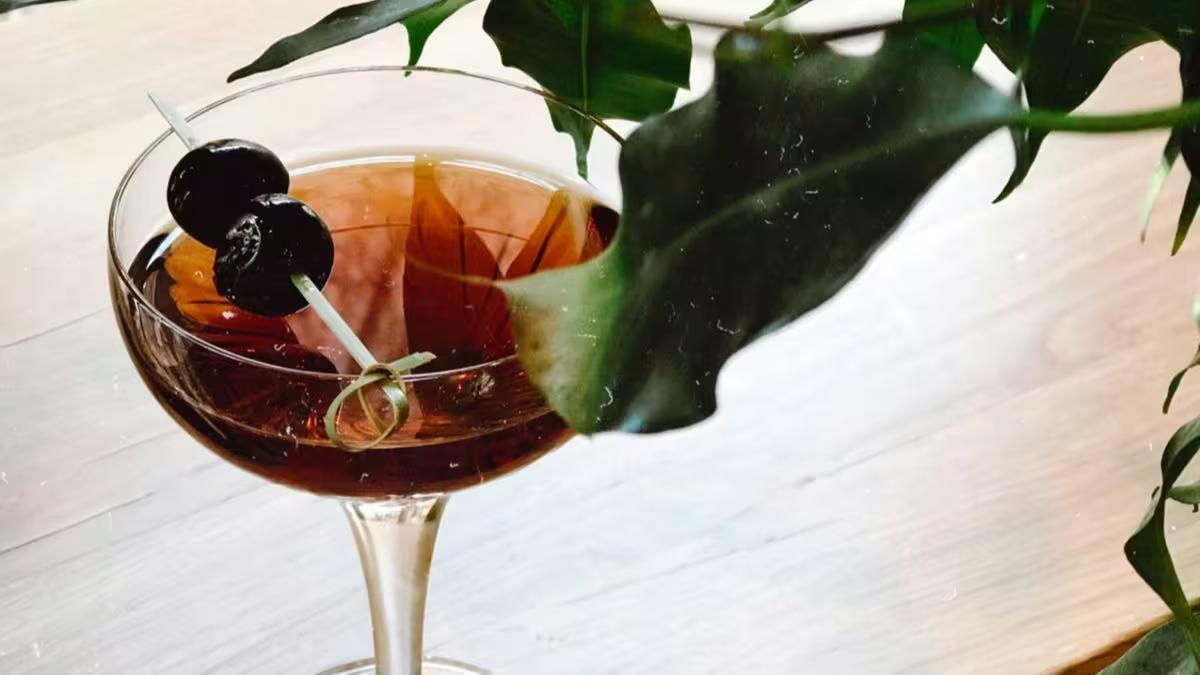
Not all cocktails work as well in a big batch as others because the texture of the cocktails changes during the storage process. Spirit-forward cocktails such as Negroni cocktails, Manhattan cocktails, and Old Fashioned cocktails are generally some of the easiest to make in a large batch, since their components will last longer in a stable form than cocktails made with ingredients like egg whites and cream (and delicate foams).
Step 2: Scale The Recipe Precisely
The second step to making cocktails in large batches is calculating the right amount of each of the ingredients. To determine how much of an ingredient you need to create the number of cocktails you want to make, multiply the amount of each ingredient needed for one cocktail by the total number of cocktails you want to make. Professional bartenders suggest that you write out the entire recipe at the new scaled amount before preparing a batch to minimise any mistakes in the ratio of each ingredient. This way, the tartness, sweetness, botanicals, and spices will remain the same in every glass, from the first to the last.

Step 3: Separate Ingredients That Change Quickly
One big mistake that people make when batching cocktails is combining all of the ingredients at once. Carbonated ingredients such as club soda, tonic, sparkling wine, or beer are lost once they are combined with non-carbonated ingredients. Fresh ingredients such as herbs lose their bright and fresh flavours when combined with other ingredients. For that reason, many bartenders choose to batch the spirit base and then add the lime or lemon at the end when the cocktail is going to be served.
Carbonated mixers
Fresh herbs such as mint or basil
Citrus garnishes
Egg whites
Delicate finishing ingredients
Step 4: Account For Dilution
A correctly prepared cocktail contains water produced by shaking or stirring it with ice. Often, when making multiple cocktails at once, this process is lost, resulting in an unusually assertive drink. To counteract this, professionals recommend including additional water to somewhat replicate the dilution created during cocktail preparation. The actual amount varies for each cocktail. Accounting for the added element of dilution is one of the most valuable ways to batch cocktails.
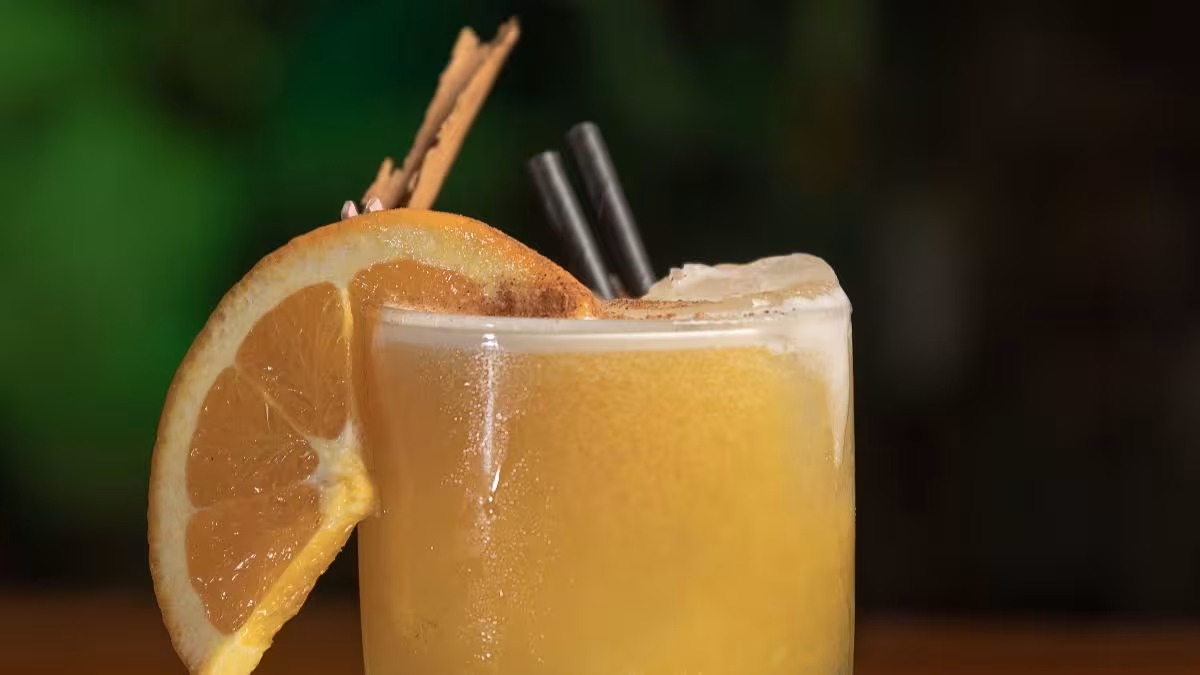
As an example, a spirit-forward Manhattan cocktail usually needs less dilution than a citrus-forward Margarita cocktail does; rather, the latter is dependent upon the balance between acidity (from the citrus), sweetness (from the sugar), and the structure of the alcohol.
Step 5: Chill Before Guests Arrive
Temperature has a very prominent effect on both the perception of flavour, as well as, texture. Experts therefore recommend chilling or refrigerating the batch before service, and to minimise the use of large batches of ice in the serving glass. Chilling the batch ensures consistency across the board and allows you to monitor the extent of any uncontrolled dilution throughout the batching process. When using a spritz-style cocktail, pour the batch into the serving glass before adding any sparkling ingredients.
Conclusion
Batching turns cocktail preparation into an efficient way to create drinks for a large gathering, like a match screening, without compromising the balance of flavours in the cocktail. When choosing the cocktail to batch, ensuring accurate scaling of ingredients and keeping unstable ingredients separate will help ensure that dilution is also taken into consideration and that all cocktails are served at their proper chill temperature. Batch cocktails should not be viewed as a shortcut but rather as a method of preserving the original character of the cocktail in its intended form.
*Drink Responsibly. This communication is for audiences above the age of 25.
FAQs:
The Negroni cocktail, the Manhattan cocktail, or the Old Fashioned cocktail are the best options. The components of these drinks are stable, and they can be made ahead of time.
You May Also Like


Drink Responsibly. This communication is for audiences above the age of 25.
Yash Lakhan


More from The Bar


Stay Inspired
Sign up to our newsletter for exclusive recipes, insider secrets and special offers - all delivered straight to your inbox.
