Cocktail shrubs: how the vintage ingredient made a comeback

There’s a belief that, whether it’s fashion trends or culinary obsessions, everything comes back in fashion once again. Trends are cyclical. Some, like culottes, are unfortunate. Others, like the return of cocktail shrubs, deserve a much warmer welcome.
What are shrubs in cocktails?
Shrubs, sometimes called drinking vinegars, are mixers or syrups made by combining plants, sugar and vinegar. They’re distinct and they’re diverse - it’s beyond a splash of lemon and lime, and it’s more complex than a splash of fruit juice.
Introduced as a concentrated, non-alcoholic syrup, shrubs can be tart, tangy, sweet, sour - they can be whatever you need them to be. If you know how…
To make a shrub, there’s generally a starting formula from which to build on.
This method, which follows a 1:1:1 ratio, is usually a plant or fruit + vinegar + sugar. There’s plenty of variations you can use for these.
Instead of sugar, for example, you can substitute any sweetener, like honey, agave or maple syrup. For vinegar, anything including white vinegar, apple cider vinegar, white wine vinegar or red wine vinegar can work.
The other ingredient? Time. Starting with an equal measure of each, giving the ingredients time to ferment in a jar is how different depths of flavour can be created.
When you’ve mastered a few simple shrub recipes, you can start experimenting by adding herbs and spices. When doing this, think of using ingredients you’d normally find used in cocktail recipes, like sage, mint, rosemary, cinnamon and allspice.
A simple bramble shrub recipe
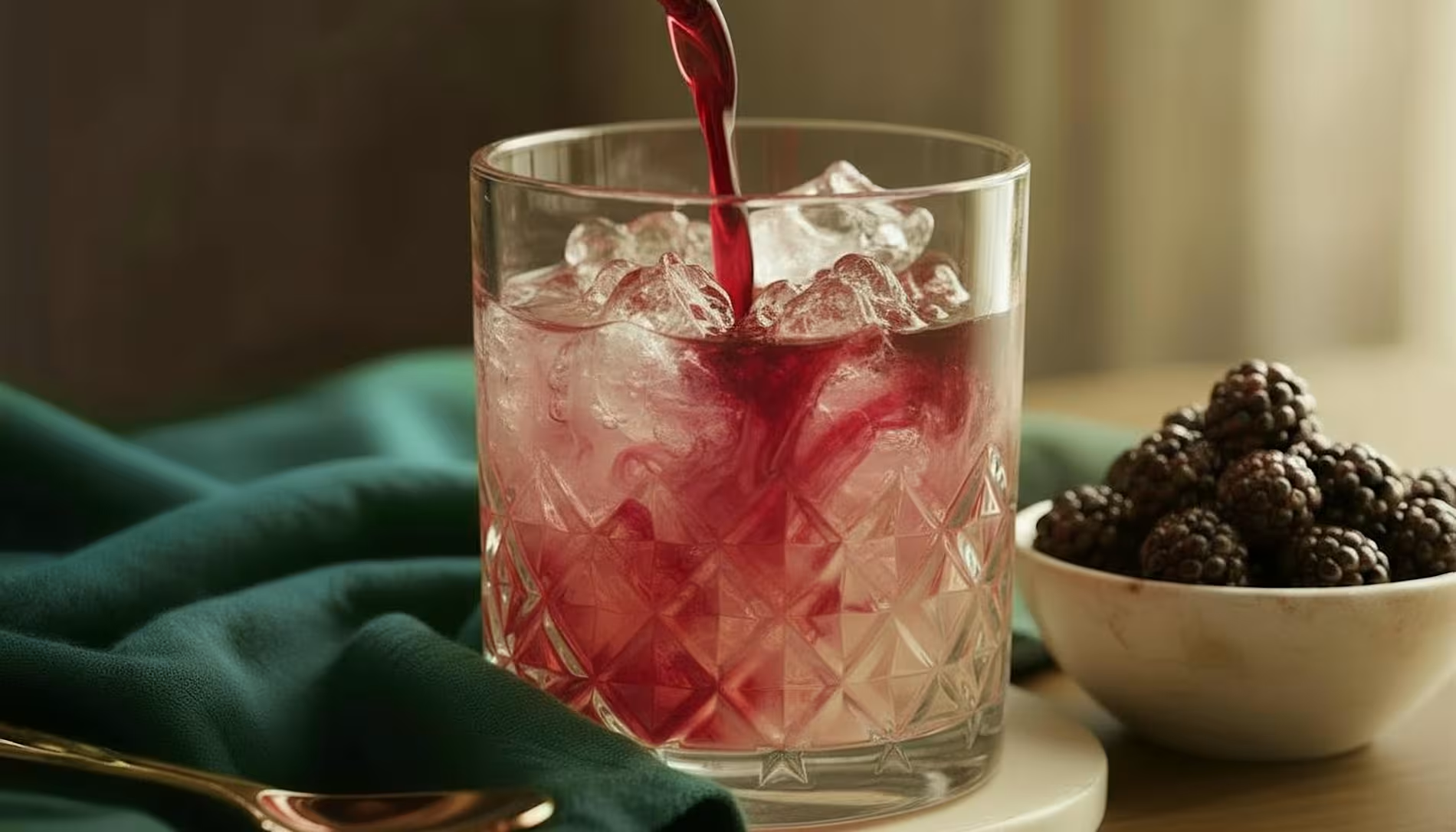
Looking for an easy first recipe? The bramble shrub is great. The flavours pair well with any non-alcoholic mixers, but also form a great base for the likes of a bramble gin drink. You’ll need:
500g blackberries
500g caster sugar
500g apple cider vinegar
To make:
After washing the blackberries, place them in a jar or bowl and pour over the sugar, giving the blackberries a little soft squishing to start the maceration. Cover with clingfilm for the first 24 hours, leaving overnight in a fridge.
When the sugar has dissolved, you’ll have a dark berry coloured syrup. Strain this into another bowl. You’ll find you have plenty of pulpy fruit caught in the sieve. As a great food waste tip, keep this to enjoy in baking or with a bowl of yoghurt.
With your mixture, add your vinegar and then transfer to your final jar or bottle. Seal this tightly, then turn it a few times for the vinegar and syrup to blend.
From here on, you can leave it in the fridge. Generally, it’s thought that 48-72 hours is the minimum you should wait before giving it a little taste. It’ll be much more potent to start with. If you prefer a mellower taste, give it longer to rest.
A history of cocktail shrubs
Shrubs got their start, as most things do, as an act of necessity.
The art of combining fruits, plants and herbs with sugars and vinegar was originally a way to reduce food waste and keep stocks healthy long before refrigeration.
From utilitarian beginnings, soon the Victorians noticed that these fruit vinegars could be enjoyed similar to the way we drink fruit cordials today. Adding splashes to water or tonic, the Victorians basically were trialling their own cocktails and mocktails.
On the other side of the Atlantic, shrubs saw a surge in popularity during Prohibition as a flavourful and notable alternative to alcoholic drinks.
Shrubs would eventually fall out of popularity in the late 20th century, due to technological advancements in refrigeration, as well as the boom in sugary soft drinks.
How the shrub came back in style
There are perhaps two main reasons shrubs came back in fashion - the rise of non-alcoholic drinks and a demand for more craft cocktails.
Today, sophisticated and elevated non-alcoholic drinks are more in demand than ever. Shrubs, naturally, are the perfect starting off point for mixologists and culinary masters to develop a whole world of flavour with some simple ingredients.
The other factor that helped usher in the return of the shrub is the boom in flavour exploration. Cocktail culture evolved beyond ordering a simple G&T and sticking to a menu of familiar favourites.
Like is often seen in gastronomy, cocktails demand constant innovation and exploration. Why should the chefs have all the fun? Whether it’s discovering the depths of umami to surprising spices and unfamiliar flavour pairings, the drinks menu has become just as diverse and daring as the food menu.
This is where shrubs became any bartender’s best friend. For any mixologist worth their salt - or should that be worth their shrub? - the rules can be rewritten with hands-on, experimental blends of sweet, sour, and fruity shrub concoctions.
From adding a tart twist to an established favourite or being the foundation of a whole new cocktail, shrubs prove that cocktail creativity has no limits.
Get inspired


The Bar Team
More from The Bar