When To Shake Vs Stir A Cocktail: How Technique Changes The Final Drink
Introduction
The choice of when to shake vs stir a cocktail relates to the degree of aeration and dilution required by the dinks and the ingredients used. Because the temperature of the ingredients is affected by both methods. Shaking provides aeration as well as a rapid temperature drop, while stirring offers dilution, while also maintaining the drink's clarity. Therefore, shaking versus stirring determines how the drink’s texture and flavour distribute, and how different elements (spirit, citrus, sugar or bitters) blend in the glass.
Dilution in cocktails or other mixed drinks should not be seen as incidental but rather as part of the drink’s structure. The prominence of ethanol is decreased by using water through dilution, releasing aromas and binding the flavours together. The method of mixing drinks will dictate the degree of dilution.
Shaking will cause a 20 to 30% dilution because of vigorous movement along with the fragmentation of the ice.
Stirring creates a slower dilution curve (approximately 15-20%) as the density of the mixture remains constant. Thus, the rate of density loss will not fall rapidly.
Using small ice cubes will increase the rate of dilution, whereas large cubes will reduce the rate of dilution.
Ice will lose its temperature faster when shaken due to the generated kinetic energy.
These differences will be shown in the finished product. A shaken citrus-based drink will have a lighter body and a little bit of haze, while a stirred spirit-based drink will maintain clarity and a viscous texture.

To ensure beverages are properly blended, shaking is typically used when making cocktails that contain any of the following ingredients: citrus juice, dairy products, and egg whites. Shaking helps break up and disperse each ingredient within the beverage.
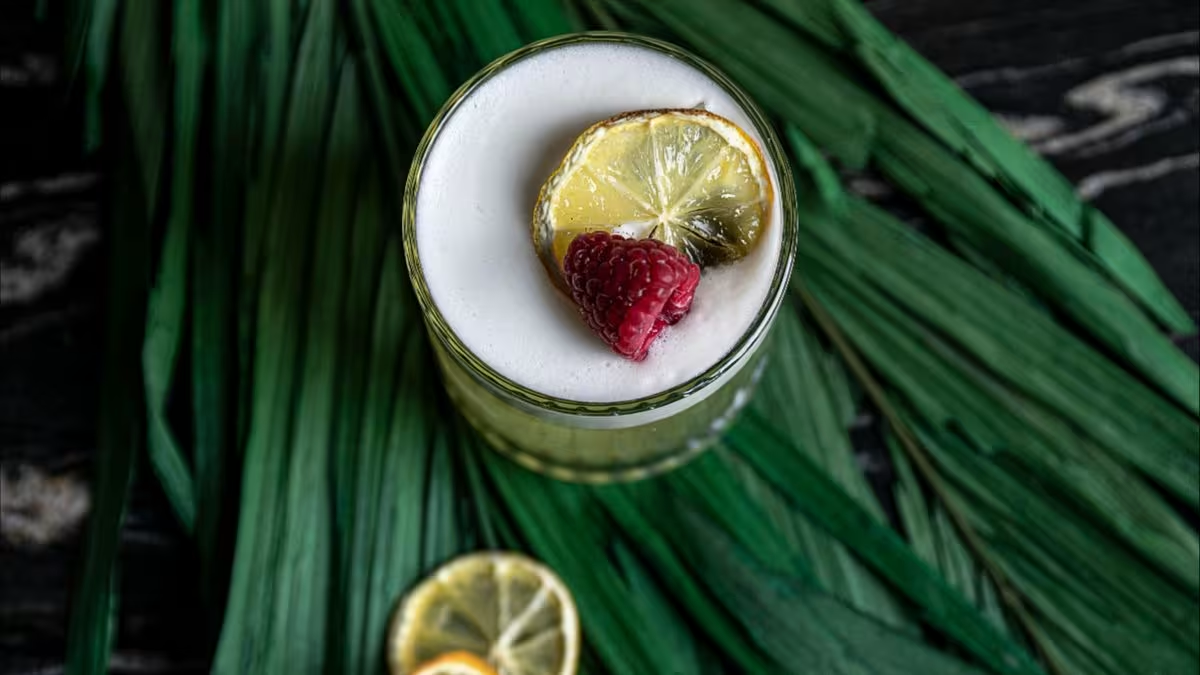
Drinks like Daiquiri cocktails and Whisky Sour cocktails benefit from shaking. When these drinks are shaken, all components are mixed, allowing the cocktail to have a perfectly balanced flavour (the tartness of the citrus, the sweetness of sugar, and the assertiveness of the alcohol).
Without the aeration created by the shaking motion, the citrus juice in these two cocktails would remain separate from the other two components of the drink, creating a cocktail with an unbalanced taste.The technique also produces micro-bubbles, resulting in a softer texture. For sour-style drinks using Johnnie Walker Black Label, shaking helps to evenly distribute the citrus oils and sugar, rather than sharp touches of acidity.
Key outcomes of shaking:
Slightly foamy or cloudy appearance.
Uniform distribution of citrus and sugar.
Rapid chilling, lighter texture.
Rounded edges on all of the acidic cocktails.

You stir drinks that are more spirit-based and benefit from the clarity of a smooth texture. Stirring helps to dilute them (with water) in a controlled manner without adding any oxygen.
Examples include a Negroni cocktail or a Martini cocktail. Both rely on layering their ingredients, rather than blending. By stirring rather than shaking, you keep each ingredient separate while still combining them into a unified drink through the slow melting of ice.
When you use a bar spoon to stir your drinks, there will be less disruption than if you were to use a larger utensil. Ice will chill an entire drink slowly, thus allowing the botanicals, bitters, and base spirits (like Tanqueray London Dry Gin) to keep their defined notes.
Key outcomes of stirring:
Clear, glass-like appearance.
Denser texture and more gradual dilution.
Keeping the focus on the base spirit's characteristics.
Minimal disruption to the aromatic compounds.
Factor - Shaking - Stirring
Dilution Speed - High, rapid - Moderate, controlled Texture - Light, slightly aerated - Dense, smooth Appearance - Cloudy or opaque - Clear Ingredient Type - Citrus, dairy, eggs - Spirits, bitters, fortified wines Temperature Drop - Fast - Gradual Flavour Integration - Fully blended - Layered and structured
This distinction highlights the fact that dilution in cocktails is directly related to both structure and perception.

The decision of when to shake vs stir a cocktail mainly relies on the ingredients used and the final product you want to produce. Drinks that include citrus require a combination of different ingredients, while drinks that want to highlight their base spirit must remain restrained.
As an example:
A Margarita cocktail should be shaken to mix the lime and tequila.
An Old Fashioned cocktail should be stirred to help preserve the integrity of the base spirit.
This choice is more about the construction of your drink than anything else.
The physics of how cocktails are mixed and their flavour profile impact whether one should shake or stir them. Shaking produces faster dilution and aeration and creates lighter and blended profiles, whereas stirring maintains clarity and density. The method of mixing cocktails also determines how ingredients mix, the temperature of the drink at different points of consumption, and how the flavours develop from the first sip to the finish. It is, thus, more than a technique — it’s an integral part of making a cocktail.
FAQs:
Shake when the drink contains citrus, dairy, or eggs for full integration. Stir when using only spirits and bitters to maintain clarity and controlled dilution.
You May Also Like



Drink Responsibly. This communication is for audiences above the age of 25.
Yash Lakhan


More from The Bar



Stay Inspired
Sign up to our newsletter for exclusive recipes, insider secrets and special offers - all delivered straight to your inbox.
