What Is Zero-Waste Bartending? All About The Emerging Mixology Trend

Introduction
Zero-waste bartending has emerged from a twofold trend: of designing drinks in more modern ways and of gearing towards a more ecologically conscious way of making cocktails and mocktails. Mixology is a constantly evolving craft continuously adapting to changing trends. No sooner are new ingredients and flavour combinations put together than they are incorporated into the preparation of different blends. Evidently, bartenders are always engaged in the process of coming up with different practices or reinventing older ones to craft imaginative blends within the arena of modern mixology. What lies at the heart of zero-waste bartending is the process of preparing drinks with little to no raw material making its way into the waste bin. This means bartenders make use of every part of an ingredient so that peels are turned into garnishes and leftover fruits into aesthetic ice. Ingredients are repurposed and refashioned, leading to inventive drinks with impeccable flavours and interesting appearances. Read on below to know more about some of the more significant elements involved in the emerging trend of zero-waste bartending:

How To Make Cocktails Using Peels, Zests, and Husks
One of the most basic aspects of zero-waste bartending is to minimise the amount of kitchen waste generated while blending drinks. This means peels, scraps and garnishes are used in concocting cocktails and mocktails as core ingredients. Here are a few examples:
Remains like coconut husk are smoked to give cocktails like a tropical rum punch a smoky touch.
Rinds and lemon wheels can be dehydrated for infusing into teas and brews while making warm beverages.
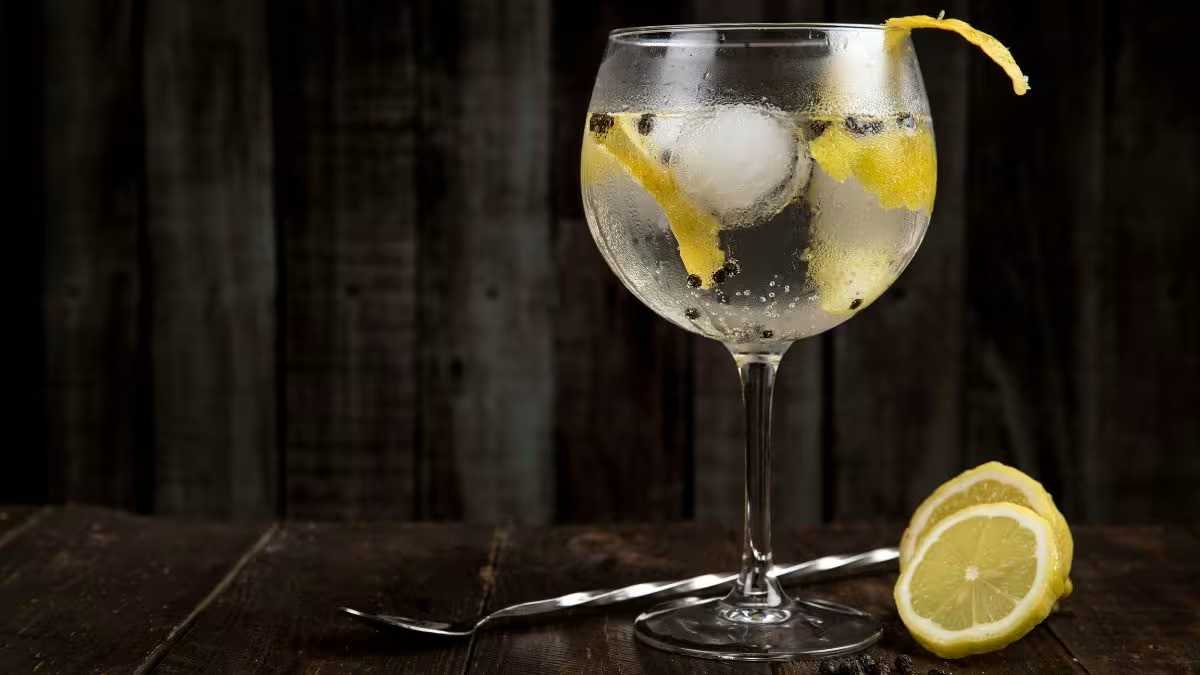
Citrus zest is often muddled into different drinks, like a simple Tom Collins cocktail, to build more flavour into cocktails.

Repurposing Fruit And Veggie Peels for Blended Drinks
In sustainable bartending, fruits and veggie peels are often also used as garnishes to bring more nuanced flavours into cocktail and mocktail blends. For instance, cucumber peels can be used to garnish a cucumber and mint gin and tonic made out of 30 ml Tanqueray No. Ten Gin or any other premium gin of choice. Leftover bits of lemon or lime peels can be repurposed into candied citrus peels, which can then be used as garnishes. Orange peels are also used as garnishes.

Sustainable Syrups For Blended Drinks & Cocktails
Another characteristic of zero-waste bartending is crafting simple syrups and flavoured syrups out of leftovers or peels. This is because peels and rinds are filled with robust flavours that seep better into a simple syrup mixture of sugar and water. Often, the sour and tart notes of orange peels and lime rinds are extracted by adding them to simple syrups. Pineapple cores, citrus husks, herb stems, and coffee grounds can be utilised similarly to craft syrups and infusions in zero-waste bartending.

Reducing Single-Use Waste
An intelligent method involved in sustainable bartending is cutting down on any single-use products. This means bartenders:
Prefer to serve drinks in wooden tumblers or cocktail glasses
Use cloth napkins in lieu of tissues
Offer metal or glass straws instead of disposable ones.
Reducing single-use waste products cuts down in large part on the waste generated while bartending, particularly at big parties.

How To Make Cocktails In Batches
Batch cocktails involve putting together larger proportions of ingredients at a time to craft drinks that can serve 10-12 people gathered together. This cuts down the use of individual bottles or fruits and vegetables that will have to be chopped and leftovers discarded, while concocting single-portion drinks. Instead, bartenders prefer to prepare just one or two zero-waste cocktails and mocktails, which can cater to more than a dozen guests, thereby cutting down on overall waste generation.
Conclusion
Zero-waste bartending is an evolving trend that focuses on how cocktails are created and served, encouraging more creative and systematic methods of using ingredients and reducing waste. This can be implemented through repurposing citrus peels or minimising single-use items by matching technique with responsibility.
Sustainable bartending does not require any revolutionary change to practices; it does require awareness and consistency. Sustainable bartending is part of an effort toward creating a more sustainable bar environment, highlighting that simple changes to how cocktails are created can affect the efficiency of bartending practices in addition to the environmental impact of modern mixology practices.
Drink Responsibly. This communication is for audiences above the age of 25.
FAQs:
Zero-waste bartending is about making the most of all your ingredients, using the skins and stems of fruits or vegetables to use them again as a syrup, garnish or infusion.
You May Also Like




Drink Responsibly. This communication is for audiences above the age of 25.
Yash Lakhan


More from The Bar



Stay Inspired
Sign up to our newsletter for exclusive recipes, insider secrets and special offers - all delivered straight to your inbox.
