Here’s Why Whiskies Around The World Taste Different
Introduction
At a whisky tasting experience which covers loads of global varieties, you might experience flavours and textures which are all different from each other, as a result of the diverse regional flourishes involved in their making. Whiskies from Scotland carry a profile distinct from that of an elegant Japanese one, which in turn varies from the sweet notes of bourbon. And there is a reason why all these different whiskies carry such distinct flavours.
If you have been wondering what these regional flairs do to whisky, here’s more on how these whiskies are distinct from one another and why they all taste so different:
Do whiskies from around the world really taste that different?
Yes. While all whiskies are essentially made from the same ingredients, that is, grains, yeast and water, where they are made and how, has a dramatic effect on the taste of the whisky. Terroir, tradition and technique all end up playing a role in the way whisky tastes.
What is distinct about Scotch whisky?
One of the key elements of Scotch whisky is that it uses malted barley. It is generally aged in used barrels such as bourbon or sherry casks and often carries a smoky undertone. The reason it tastes different is because peat smoke is used for malting whisky. The cool, damp Scottish climate also means slower ageing, which leads to a smoky, earthy flavour.
Why does American bourbon taste sweeter and fuller?
Bourbon, which is made from at least 51% corn and is aged in new charred oak barrels, carries its sweet taste because of the sweet corn. Fresh barrels also add a lot of vanilla-like, spicy notes to the whisky, making it taste fuller. A robust woody influence and warmer climes lend the whisky more toffee-like, oaky notes too, which make the bourbon more full-bodied.

What is distinct about Japanese whisky?
While Japanese whisky is greatly inspired by Scottish blends, it is often more subtle than the latter. Japanese oak barrels or mizunara casks are used for ageing this spirit, and the focus is on precise and harmonious integration of delicate floral, citrusy and tea-like flavours.
Why does Indian whisky carry a lot of robust flavour notes?
Indian whiskies are aged in warmer climes, which makes their flavours more pronounced. Local whisky variations are made using molasses-based spirit blended with grain whisky, which also gives these whiskies more complexity and a lot of intense yet layered flavours.
How is Irish whisky different from Scotch whisky?
Irish whisky is usually triple-distilled for smoothness and can use either malted or unmalted barley. It is known for its light flavours and lesser peaty notes. Scotch, on the other hand, always uses malted barley and carries a lot of caramel-like, smokier flavours.
Do different grains mean different flavours?
Absolutely. While barley has a nutty and malty finish, which is essentially one of the major flavours in Scotch and Japanese whisky, corn lends bourbon a sweet and typically creamy finish. Rye whisky is drier and spicier, and adding wheat to blended whiskies gives them a lot of smooth and soft textures.
Does the type of barrel influence the taste of whiskies?
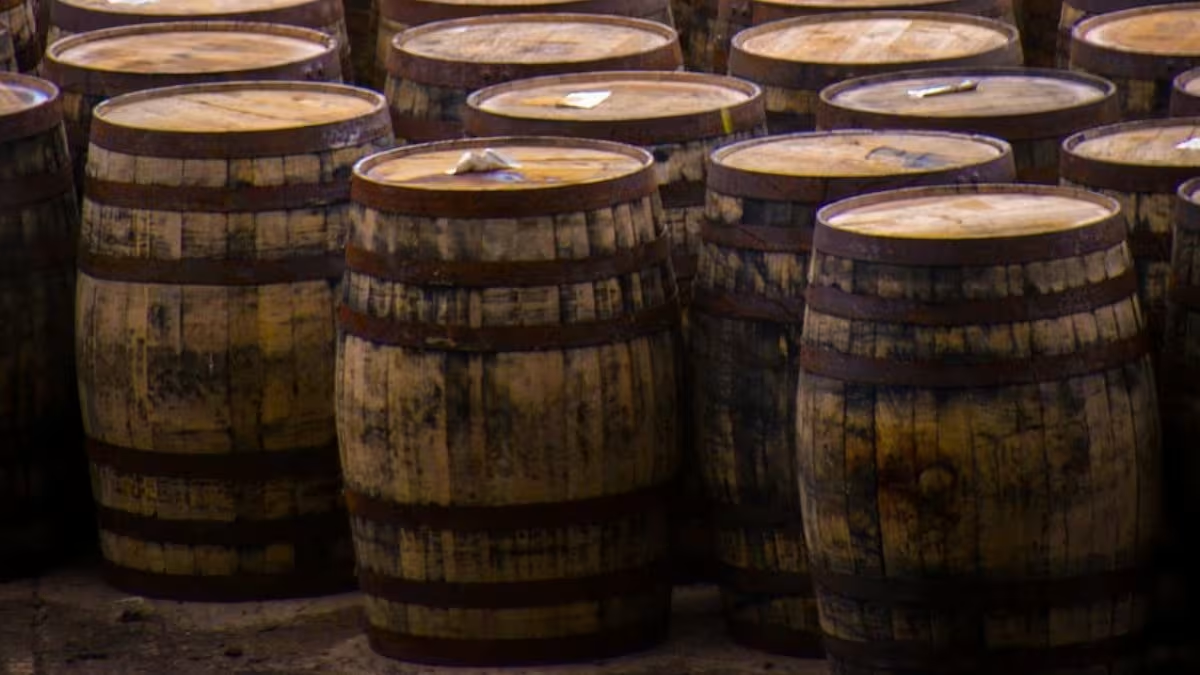
Yes. Barrels have a major role to play in giving the finishing touches to a whisky’s overall flavour profile. New charred oak barrels give bourbon a robust finish. On the other hand, the notes of sherry barrels used to age Scotch whisky are very subtle and therefore bring light floral and fruity undertones into blended Islay or Speyside whiskies.
Do whisky regulations also affect flavour?
Most certainly. For instance, Scotch must always be made in Scotland, which means it is aged for 3 or more years in oak barrels and contains no added flavour. This ensures that the refined flavour of malted barley retains a lot of its complexity. On the contrary, few regulations on Japanese whisky-making processes allow more room for blending and innovation.
Drink Responsibly. This communication is for audiences above the age of 25.
You May Also Like
Drink Responsibly. This communication is for audiences above the age of 25.
Aishwarya S

More from The Bar


Stay Inspired
Sign up to our newsletter for exclusive recipes, insider secrets and special offers - all delivered straight to your inbox.
