Why The 2:1:1 Ratio For Cocktails Is A Beginner’s Best Friend

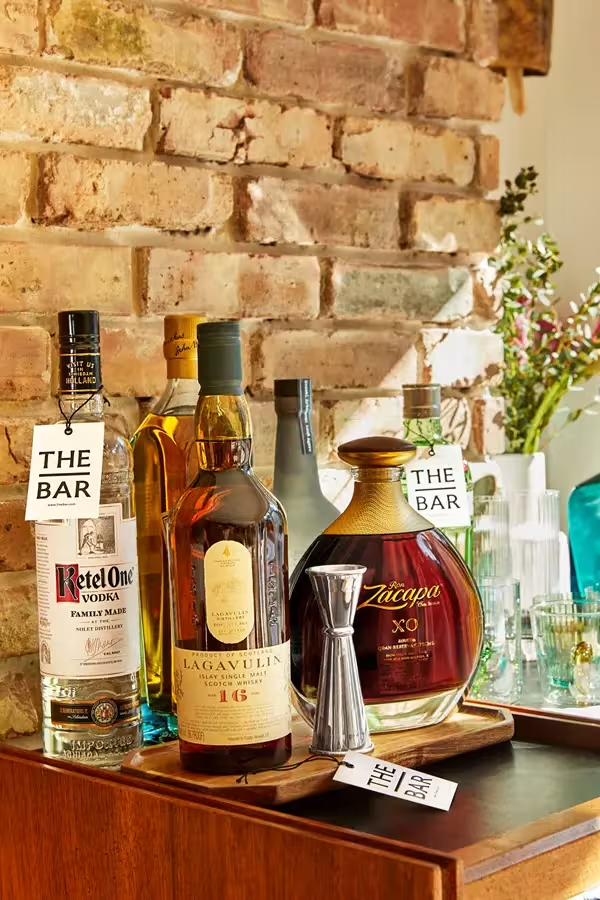
The Bartender’s Golden Ratio is the not-so-secret code behind nearly every cocktail that actually works. As you set up your first home bar. For now, it’s smarter to start with the foundations: mastering the classics and mixing them with balance.
The secret lies in the Bartender’s Golden Ratio. No need to panic at the mention of maths — this one’s simple, and it works every time. Professionals swear by it because it guarantees balance, flavour, and consistency.
So what is it? 2:1:1. Two parts spirit, one part sweet, one part sour. That’s the backbone behind many iconic cocktails. Once you know this, you can adjust to taste, experiment with ingredients, and still get a dependable, delicious drink.
Understanding The Golden Ratio

It’s a universally accepted rule that cocktails must be mixed in measures of 2:1:1. The 2:1:1 ratio is a way of remembering in what quantities essential ingredients should be added to a cocktail. The “2” is for the base spirit, the actual alcohol that is being used. Making a Daiquiri? The recipe will need two parts of rum to the other ingredients. Mixing a Margarita cocktail? The tequila is what you’ll need two parts of.
Next comes the “1”. This represents the sweet element of your cocktail. Generally, this takes the form of a syrup or a liqueur. Simple syrup is a very common ingredient you’ll see listed in cocktail recipes, and it’s a mixture of sugar and water. You can make it at home by slowly dissolving 1/2 cup of granulated sugar in 1/2 cup of water, and then storing in a tightly-sealed jar once it cools. It’s perfect to use for up to one month when stored in the refrigerator, so don’t be hesitant about prepping a batch because it really makes mixing cocktails easy. Keep in mind though, that simple syrup is just one of the many sweetening elements you can add to your cocktail. As you grow more confident, you can explore more variations.
The last “1” of the Golden Ratio stands for the sour element. This is where citrus comes in: your lemons, limes, oranges, and other tart fruits.

Professional bartenders and mixologists may mix many drinks in the course of one evening. Does this mean they have every possible recipe memorised? Well, yes to some extent, but mostly they follow the Golden Ratio and adapt it to their needs. For instance, if the Daiquiri sees them mix rum, simple syrup and lime juice in the 2:1:1 proportion, then swapping the rum for a similar quantity of gin transforms this into the recipe for a Gimlet. If the rum is replaced with tequila in the same proportion, then you have a Tommy’s Margarita cocktail. (One standard drink of each of these cocktails would have about 45 ml of the base spirit.) What if you’re mixing a drink with two base spirits? Here, the “2” of the ratio would get split between both of these ingredients.

Some accounts trace the rule to the actual drink many modern cocktails originated from: the Punch. Reportedly, Punch was a popular beverage in the 17th-19th centuries, and a rhyme that best expressed its mixing proportions went like this: “One of sour / Two of sweet / Three of strong / Four of weak”. While this isn’t an exact replica of the 2:1:1 rule, you can see where the idea of these fixed measures may have arisen from. As the cocktails and mixology movement picked up steam — aided in no small part by the imposition of Prohibition in America, which meant that the taste of robust bootlegged spirits often had to be concealed with plenty of other, better-tasting ingredients — this ratio entered the mainstream, and became the norm.
Get inspired


Drink Responsibly. This communication is for audiences above the age of 25.
Ashifa Bano
More from The Bar

Stay Inspired
Sign up to our newsletter for exclusive recipes, insider secrets and special offers - all delivered straight to your inbox.
