Whisky Sour: A Brief History Of The Classic Cocktail, And How To Make It
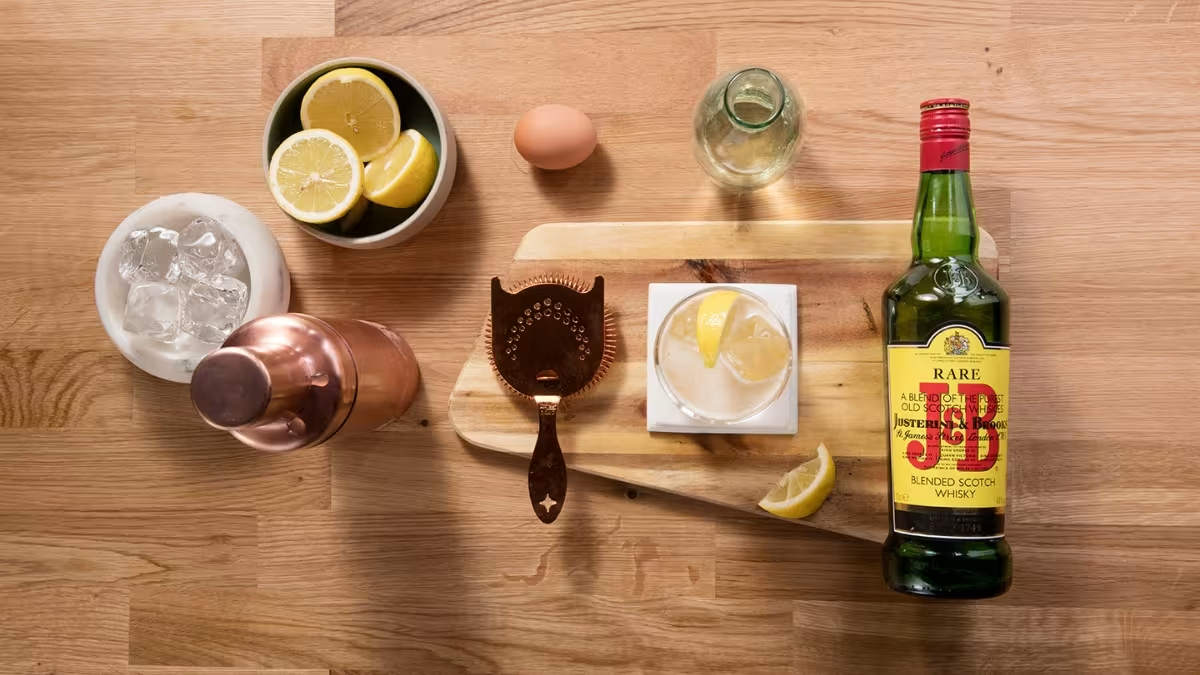
Whisky Sour is a classic drink you can never go wrong with. Ever wondered how it came to be? Let’s take a quick trip into the past.
Where It All Began
Whisky itself is believed to have been invented in the late 15th century. There are Scottish records mentioning whisky that date to 1494. A form of whisky's predecessor was likely produced by farmers with surplus grains such as barley, corn, rye, and wheat.
Another widely understood belief is that whisky distillation was brought over by missionaries travelling between Ireland, Scotland and mainland Europe. Different regions in Europe producing the liquor were churning out different kinds of whisky. This was primarily due to the different quality of grains, yeast and water used to make it.

Enter: The Whisky Sour
While this cocktail was first mentioned in the 1860s in The Bartender's Guide by Jerry Thomas, historians have reason to believe it prevailed even before that time period. Just like several other cocktails, the Whisky Sour's origin story also comes from seafaring men.
In the 19th century, sailing was a difficult form of travel. There would be periods beset by a severe lack of food and clean water. On top of these woes, sailors were very much at risk of getting scurvy due to a lack of Vitamin C, and the condition could be fatal in that era. To keep scurvy at bay, sailors would carry lots of limes, lemons and oranges. At the same time, making whiskies and other spirits was a common activity among the sailors. These factors possibly gave them the chance to combine alcohol and citrus, the two core whisky sour ingredients.
The original Whisky Sour recipe from Thomas’ book reads:
(In a small bar-glass) Take one large teaspoonful of powdered white sugar dissolved in a little water, the juice of half a small lemon, one wine-glass of bourbon or rye whisky. Fill the glass full of shaved ice, shake it up and strain it into a claret glass. Ornament with berries.
Apart from Thomas' book, Whisky Sour has been referenced in two other documents: the 1870 edition of the Wisconsin newspaper Waukesha Plainsdealer, and in 1872 from a former ship steward named Elliot Staub, who “invented” it in a bar in Iquique (then part of Peru).

In The Present Day
The Whisky Sour is easy to make. But its simplicity causes many to fumble over the recipe. The key is to maintain the balance between sweet and sour.
This cocktail today has several modern-day variations. But the recipe that is most commonly accepted calls for these whisky sour ingredients: 50 ml of bourbon whisky, 35 ml of lemon juice, 12 ml of 2:1 sugar syrup, a dash of bitters (optional), half a fresh egg white, ice, and a bit of lemon zest. All ingredients except the zest are shaken with ice and strained into an ice-filled glass. The zest is now squeezed into the drink and added as a garnish (the classic option is a slice of orange and a cherry on a stick).
You can make a Whisky Sour recipe without the egg white, but its texture won't be as silky. You can also add a bar spoon of red wine — this rendition is called the New York Sour. There is also a debate on using rye or bourbon. But mixologists say they use bourbon when they want the sweetness to overpower and rye to spice up the cocktail. However, to each their own!
The simplicity of the Whisky Sour makes it open to experimentation, and many bartenders and mixologists have given their own twist to this concoction.
*Drink Responsibly. This communication is for audiences above the age of 25.
FAQs:
A classic Whisky Sour combines whisky, fresh lemon juice and sugar syrup, often with egg white for a silky texture and foamy top.
Get Inspired


Drink Responsibly. This communication is for audiences above the age of 25.
Apoorva Rao
More from The Bar


Stay Inspired
Sign up to our newsletter for exclusive recipes, insider secrets and special offers - all delivered straight to your inbox.
